Nonwoven shopping bags
Film-to-nonwoven laminates for bags and promotional articles. Evaluate bond strength, flexibility and the effect of printing or surface treatment.
 ADHESIVE PIONEERS
TEXTILE & LAMINATION
Adhesive solutions for bringing textiles, nonwovens and films together — from laminated shopping bags to flexible industrial composites.
Explore the construction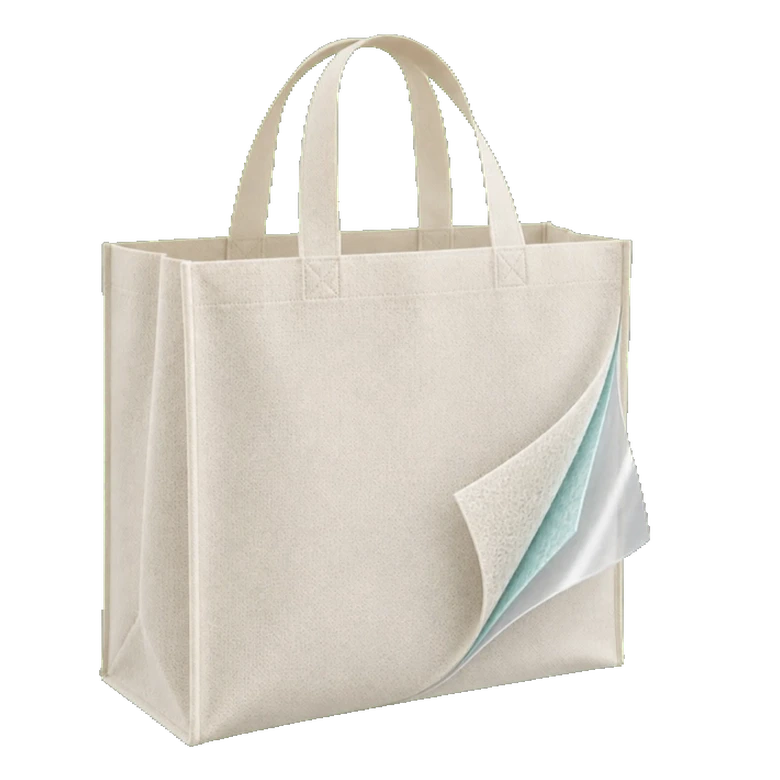
THE APPLICATION
The bond is one part of a complete laminate. Start with the carrier, the facing and the way the finished article will be used.
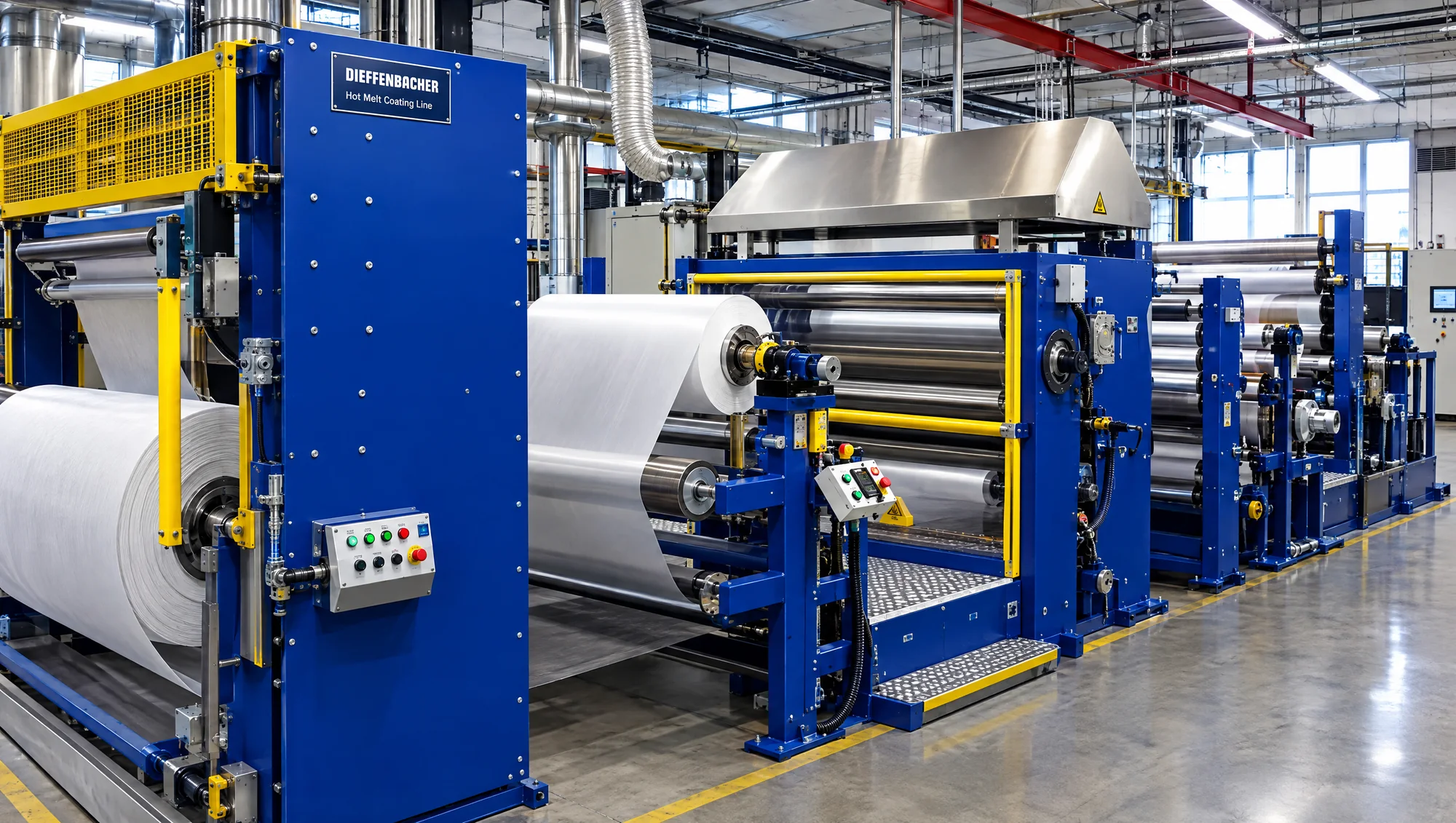
For nonwoven shopping bags, a film can provide the printed or protective outer face while the nonwoven supplies the carrier structure. Other constructions combine textiles with films, foams or additional fabric layers. Adhesive selection should follow the specific materials and converting process.
APPLICATION POSSIBILITIES
Film-to-nonwoven laminates for bags and promotional articles. Evaluate bond strength, flexibility and the effect of printing or surface treatment.
Fabric-to-fabric and fabric-to-foam assemblies for interiors, upholstery and other flexible components.
Textile or nonwoven carriers combined with functional films. Match the bond to the required feel, construction and end-use conditions.
DEVELOP AROUND YOUR LINE
Identify the film, textile or nonwoven, together with finishes, coatings and any surface treatment.
Review coating method, line speed, temperature, pressure and the available processing window.
Define peel behaviour, softness and the relevant heat, moisture or washing conditions before testing.
COATING & MATERIAL PERFORMANCE
Adhesive chemistry, coating coverage and laminate design all influence flexibility, feel and functional performance.
EXPLORE THE INTERFACE
Discrete deposits leave uncoated areas between the bonds. Assess the pattern and coating quantity together with the fabric or membrane to balance adhesion and feel.
Open areas alone do not establish the breathability of the complete laminate.Discontinuous coating can help preserve softness and moisture-vapour transport in suitable textile laminates. Evaluate the pattern and adhesive quantity together with the membrane or fabric.
Engraved rollers and slot applicators offer different ways to deposit adhesive. Match viscosity, coating uniformity and contact to the construction and the available equipment.
Dry adhesive webs and powders are also used in textile lamination. They require equipment and activation conditions suited to that format; they are distinct from coating a liquid dispersion or molten adhesive.
A laminate can hold together yet feel too stiff or lose a required function. Review handle, stretch recovery, appearance and breathability alongside adhesion.
VALIDATE THE FINISHED LAMINATE
The test programme should follow the product: a shopping bag, an upholstery composite and a functional textile do not share the same requirements.
Check the actual film, print and nonwoven combination. Evaluate peel adhesion, folding and the finished feel after lamination, including the effect of the selected coating quantity.
Check initial handling strength and the properties of the fully developed bond. Where required, assess wash durability, flexibility and functional performance on the complete laminate.
Thermoplastic hotmelts set by cooling. Reactive PUR hotmelts additionally cure through a chemical reaction; aqueous dispersions require water removal. These routes have different equipment and processing needs. Discuss suitable OYTI options for your line.
ADHESIVE SELECTION
Discuss hotmelt and polyurethane dispersion options with our team. Grade suitability is evaluated with your actual substrates and process conditions.

Explore hotmelt technology for suitable textile and nonwoven bonding constructions.
Explore OYTITHERM
Discuss polyurethane dispersion technology for compatible lamination applications.
Explore OYTIPURLET’S BUILD THE NEXT BOND.
Tell us about your materials and your production process. Let’s explore the right adhesive together.
Talk to our team info@oyti-adhesives.com+90 226 400 00 27