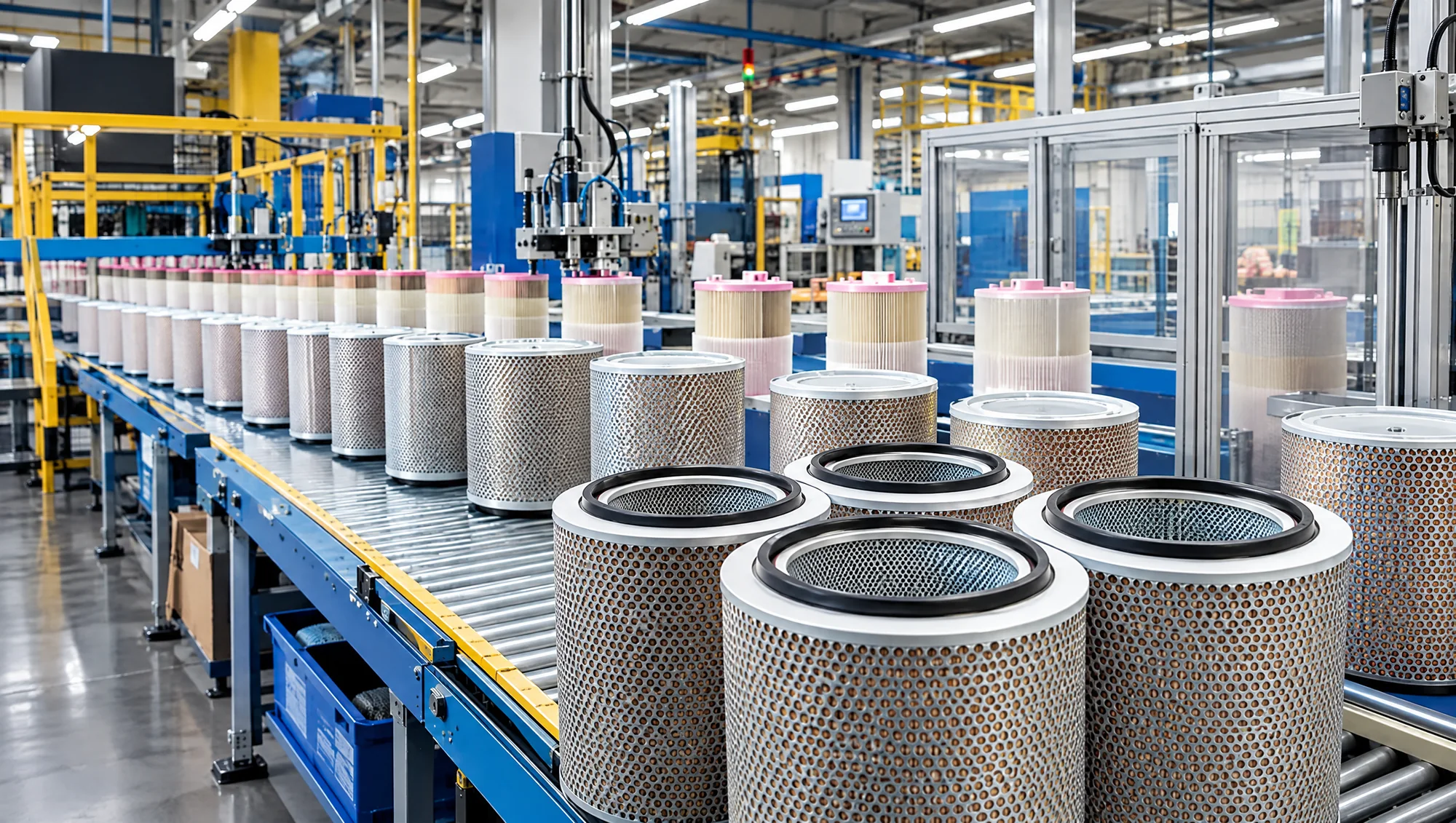
EVA & polyolefin
EVA and polyolefin hotmelts are established options in filter assembly, including pleat stabilisation and component attachment. Match adhesion and setting behaviour to the media, bead pattern and production speed.
 ADHESIVE PIONEERS
FILTRATION
Hotmelt and polyurethane casting solutions for filter elements, cartridges and end caps. Matched to the construction and processing needs of your filter.
Explore adhesive solutionsScroll to explore the layers. Select a numbered point for application details.
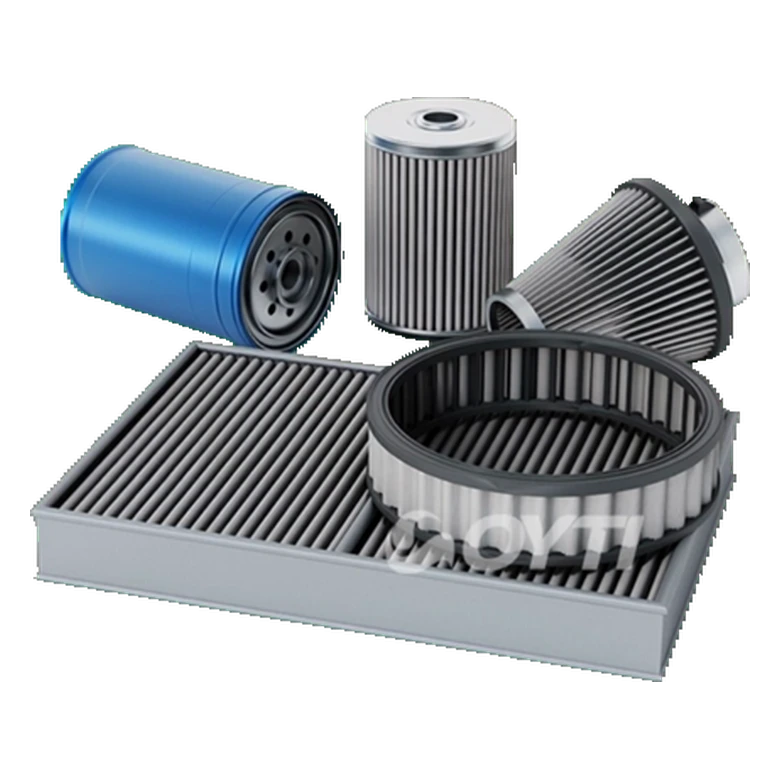
Match pleat stabilisation and component assembly to the media and process. Discuss EVA, polyolefin or specialist polyamide hotmelt options with our team.
Explore OYTITHERMTwo-component polyurethane casting systems for end-cap production.
Explore casting systemsMatch casting parameters to component geometry and production.
Explore casting systemsTHE APPLICATION
Filter assembly requires the right combination of processing time, initial strength and resistance. We discuss the filter media, geometry and operating conditions before selecting an adhesive or casting system.
THE CHEMISTRY BEHIND THE FILTER
The bonding task comes first: stabilising media, joining a frame or embedding an end cap calls for a different balance of flow, strength and setting behaviour.
EXPLORE THE CONSTRUCTION
A continuous filter sheet is folded into pleats. The view shows the connected faces and open spaces between them, rather than separate fins.
Review: media compatibility, pleat geometry and active filter area.
EVA and polyolefin hotmelts are established options in filter assembly, including pleat stabilisation and component attachment. Match adhesion and setting behaviour to the media, bead pattern and production speed.
Two-component PU systems can embed filter media in an end cap or frame. Viscosity, pot life and cured hardness help define the filling and handling process. The required flexibility and resistance guide selection of the casting formulation.
Epoxy systems are another route for filter bonding and potting where chemical or thermal resistance is critical. Two-component grades require controlled mixing; heat-curing grades need a compatible cure cycle. Validate the complete element in its intended environment.
These are technology routes for application discussion. The suitable chemistry and available OYTI grade are selected with our team for the specific filter construction.
TEMPERATURE / THREE DIFFERENT QUESTIONS
A temperature value only becomes useful when its purpose and test method are clear.
The melter and nozzle settings control flow and wetting. A processing value such as 160 °C is a grade-specific setting, not a universal melting point or a filter service rating. Follow the selected adhesive’s technical data sheet.
The reported softening point describes a material property measured by a defined method. It must be distinguished from the recommended application temperature and the load-bearing performance of the finished bond.
Specify continuous and peak temperatures together with exposure time, pressure and fluid contact. Evaluate the assembled filter under these conditions; a processing temperature alone cannot establish its service capability.
Specialist polyamide hotmelts and reactive systems may be considered where the application requires a different balance of thermal and chemical resistance. Chemistry alone does not replace testing of the actual construction.
FROM MEDIA TO FINISHED ELEMENT
Bring the media, carrier, end-cap design and operating conditions. Together, we can define a useful trial and the checks needed before production.
Check media compatibility, bead position and penetration. The adhesive should hold the construction without unnecessarily obstructing the active filter area. Review the bond after the agreed conditioning cycle.
For two-component systems, establish the specified mix ratio, mixing quality and usable working time. Match shot size and filling sequence to the component geometry, and inspect for voids or incomplete filling.
Agree when the element can be demoulded, handled and tested. Confirm cure conditions and the required final hardness on representative cast sections rather than relying only on elapsed time.
Use the relevant air, oil or fuel environment, temperature and exposure duration for the project. Define leak checks and bond-retention criteria for the finished filter, including ageing where required.
General industry references for chemistry and process selection; these are not specifications or approvals for OYTI products.
FILTRATION / OYTI
OYTITHERM / FILTRATION GRADES
Explore filter-manufacturing and lamination grades by their intended materials and bonding role.
An EVA hotmelt developed for filter manufacturing, with strong adhesion to PUR, fast setting and a flexible bond.
Review the actual substrates and geometry.
Request TDS/SDSA polyolefin hotmelt developed for air-filter manufacturing, combining initial tack, adhesion and cohesive strength.
Developed for the requirements of air-filter manufacturing.
Request TDS/SDSFor nonwoven-to-film lamination in filter production, with initial tack and rapid cohesion build-up. Confirm compatibility with the actual filter media.
Not for surfaces containing plasticizers, such as plasticized PVC.
Request TDS/SDSRequest the current TDS and SDS for grade-specific technical data and handling information. Confirm suitability with your actual materials and process.
MATCHED TO YOUR PROCESS
Start with a product family.
Then select the grade for your application.
HIGH PERFORMANCE HOTMELT ADHESIVES

Discuss EVA, polyolefin and specialist polyamide hotmelt routes with our team. The suitable OYTITHERM grade depends on the filter construction, application method and required performance.
Explore OYTITHERMPOLYURETHANE CASTING
Two-component polyurethane casting systems, available filled or unfilled, for filter inserts, end caps and cartridges.
Discuss your filterLET’S BUILD THE NEXT BOND.
Tell us about your materials and your production process. Let’s explore the right adhesive together.
Talk to our teaminfo@oyti-adhesives.com+90 226 400 00 27