Explore OYTITACK latex-free contact dispersions for foam and upholstery assembly. Connect your material choices with the shape, feel and production needs of the finished component.
Latex-free options. A closer look at the connection.
Complex shapes. Confident assembly.
Furniture production brings foam, textiles and supporting structures together. We focus on the balance between immediate hold, enough working time and a flexible finished bond.
Foam, textile and support materials
Tension in the assembled component
Spray pattern and application method
Working time before assembly
MATERIALS & INTERFACES
A soft material. A considered connection.
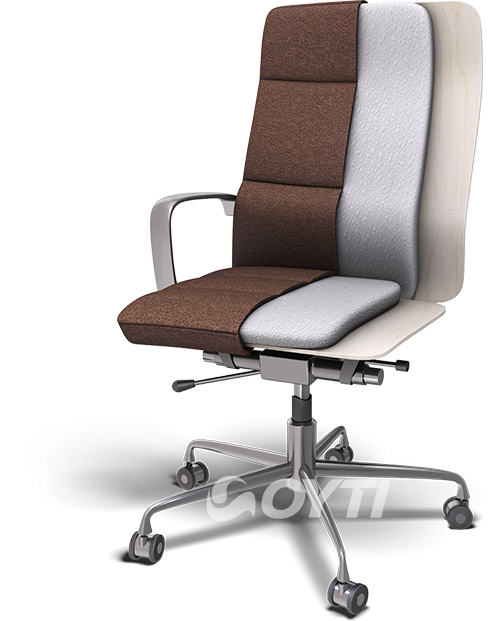
Adhesive solutions for the material combinations behind upholstered furniture, office chairs and shaped foam components.
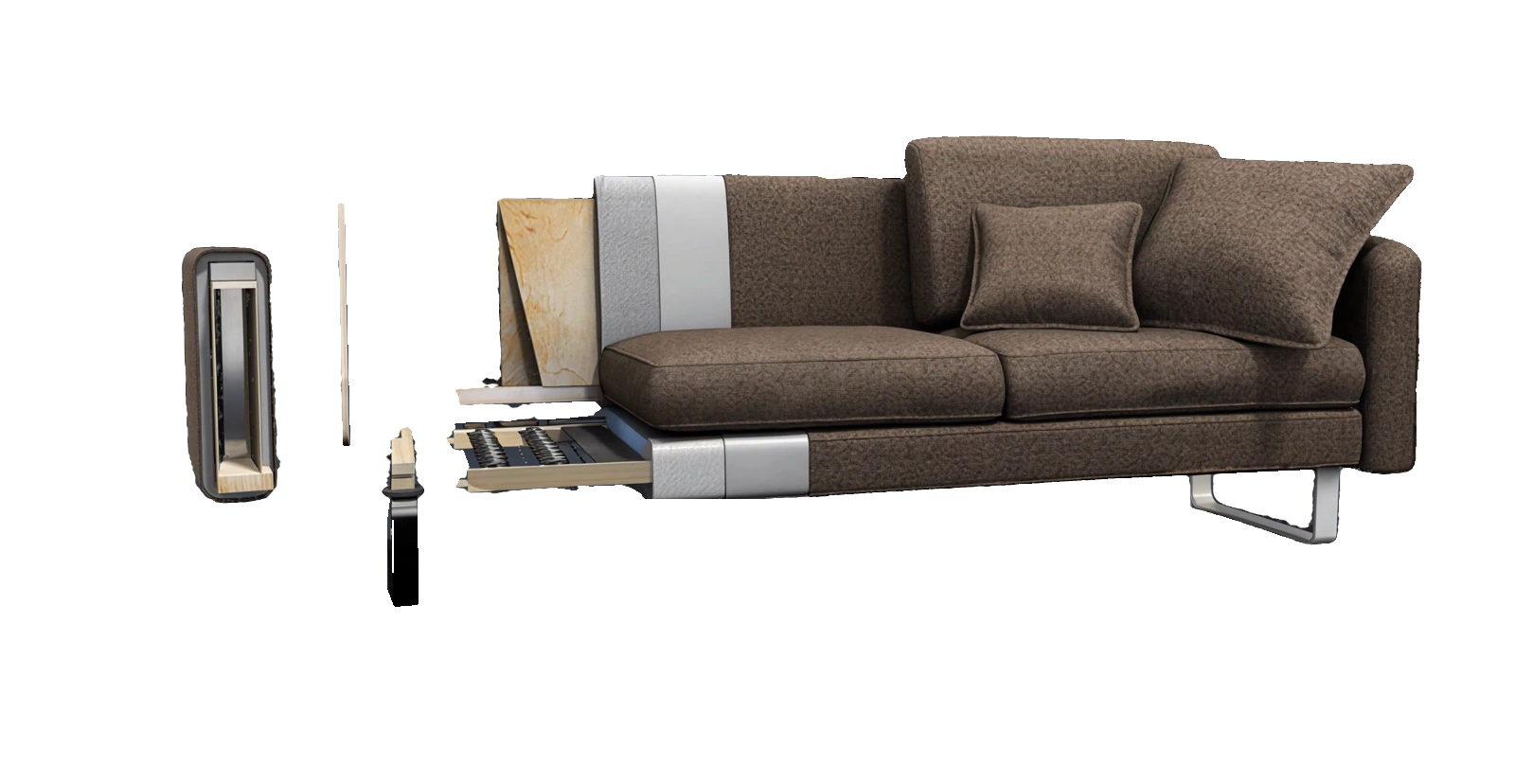
In contactLayers apart
Illustrative material arrangement.
01 / MATERIAL STUDY
Start with the foam itself.
Check the actual foam combination, including density, surface structure and compressibility. Compare initial handling with the fully conditioned bond.
Include each foam grade in the trial; compatibility is specific to the material combination.
02 / MATERIAL STUDY
Keep the connection in the background.
Bring the cover material into the trial. Inspect coverage, local adhesive build-up and the feel of the bonded area. Surface finishes and backing layers belong in the same assessment.
+
Textile covers · Nonwovens · Backing layers
Assess appearance and touch alongside bond strength.
03 / MATERIAL STUDY
Give the shape a secure start.
Curved foam and wrapped edges load a fresh bond differently from a flat sample. Evaluate tight radii, edge lift and the first handling step using the real component geometry.
+
Curved foam · Wrapped edges · Small components
Check contour hold after joining and again after conditioning.
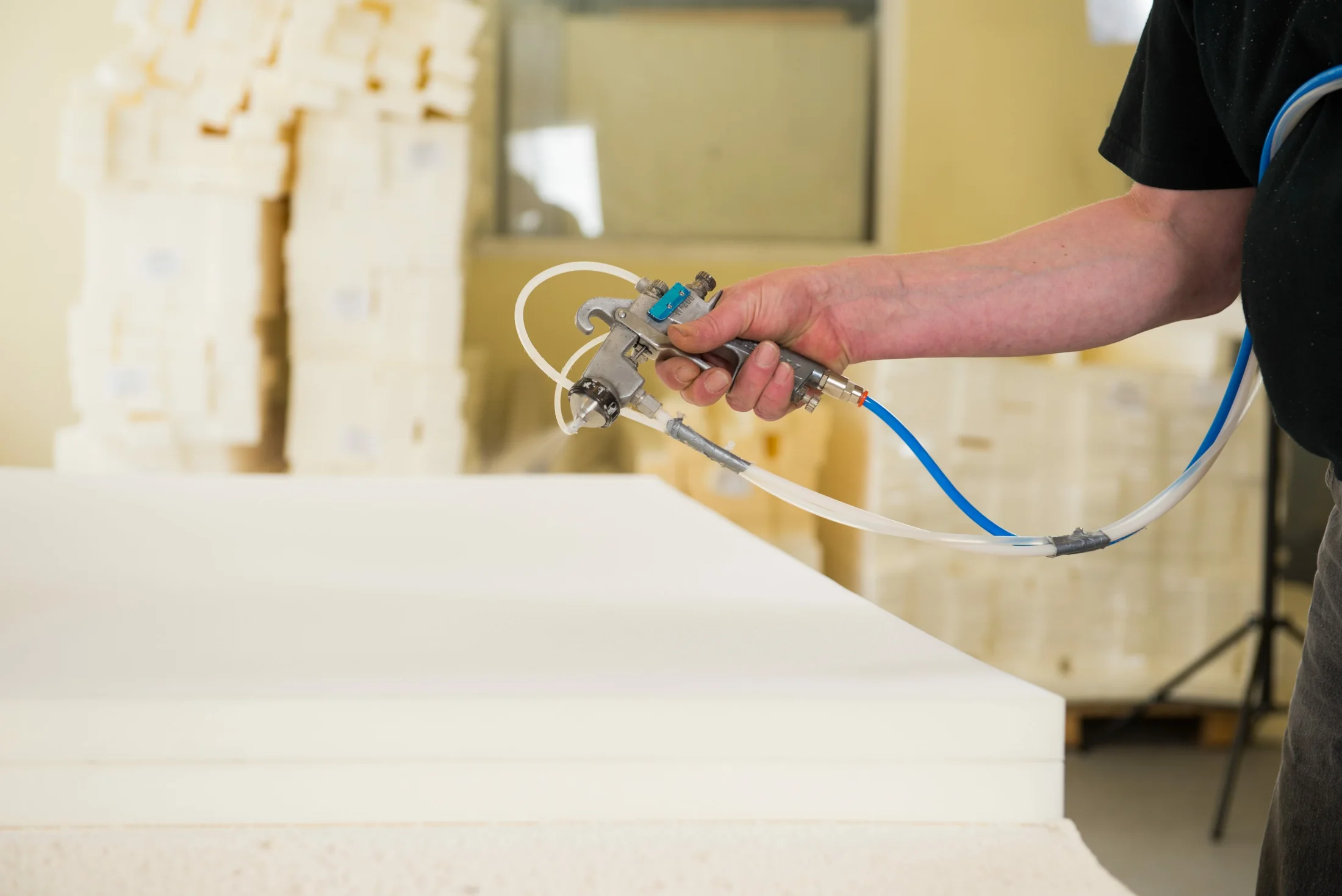
From spray coverage to assembly time, the application process shapes the bond between cushioning and upholstery materials.
Water-based contact bondingFrom the surface to the finished feel.
CloserWider
Coverage follows the component.
Check surface contact across flat areas, edges and curves. Match the pattern and adhesive quantity to the selected grade, the substrate and the application equipment.
↳ Check coverage, edge contact and local build-up; use the recommended overspray-free spray setup.
Find the right joining window.
Water-based systems need a suitable sequence between application and joining. Check the grade instructions and the effects of airflow, room conditions and material absorbency.
↳ Confirm the window with your actual line conditions.
Make contact. Then evaluate.
Bring the surfaces together with the pressure and contact time appropriate to the grade and foam. Check initial handling and contour hold, then assess the conditioned bond.
↳ Review strength, flexibility and the feel of the component.
Schematic sequence. Application settings and timing are grade-specific.
UPHOLSTERED FURNITURE
Different layers. One comfortable whole.
From shaped foam and cushioning to upholstery and supporting materials, the adhesive needs to fit the complete furniture construction.
01
Backrest & contours
Choose the right initial hold for shaped foam and tension bonds.
Match initial hold and flexibility to the foam combination and assembly sequence.
02
Upholstery & contours
Consider fabric, tension and the shape of the finished component.
03
Supporting materials
Evaluate each substrate combination together with the application method.
LATEX-FREE CONTACT DISPERSIONS
Soft where it matters. Clean where it counts.
Completely latex-free contact bonding for foam and upholstery: a more flexible seam, greater UV resistance and overspray-free application.
FOLLOWS THE FOAM
A softer, more flexible seam.
More flexible than conventional latex-based contact dispersions, the bond seam moves with soft foam and upholstery materials. It supports comfort and integrates more naturally into the finished component.
COLOUR STAYS TRUE
Greater UV resistance.
The latex-free formulation offers greater UV resistance and avoids the brown discolouration associated with ageing conventional polychloroprene-latex dispersions. It helps preserve the appearance of light-coloured materials.
ON THE COMPONENT
Overspray-free application.
Our formulation is designed for overspray-free spraying, helping keep adhesive on the intended bonding area. Cleaner surrounding surfaces mean less adhesive loss, less contamination and less cleanup around the work station.
Match the nozzle, pressure and spray distance to the recommended application setup.
LATEX FREE · MATERIAL-CONSCIOUS BONDING
Think beyond the bond line.
A mono-material concept starts with the complete construction. Foam, adhesive, covers and supporting layers all matter when you plan for a future recovery route.
Our completely latex-free contact dispersion combines a more flexible bond seam with greater UV resistance and overspray-free application. Bring your material targets into adhesive selection alongside the required hold, finished feel and production process.
Latex-free describes an adhesive requirement. Recycling compatibility must be validated for the complete construction, together with the relevant recovery partner.
MATCHED TO YOUR PROCESS
Explore the adhesive solutions.
Start with a product family. Then select the grade for your application.
LATEX-FREE CONTACT DISPERSIONS
Completely latex-free, water-based contact dispersions for foam and upholstery. A more flexible seam, greater UV resistance and overspray-free application support the finished feel and a cleaner process.
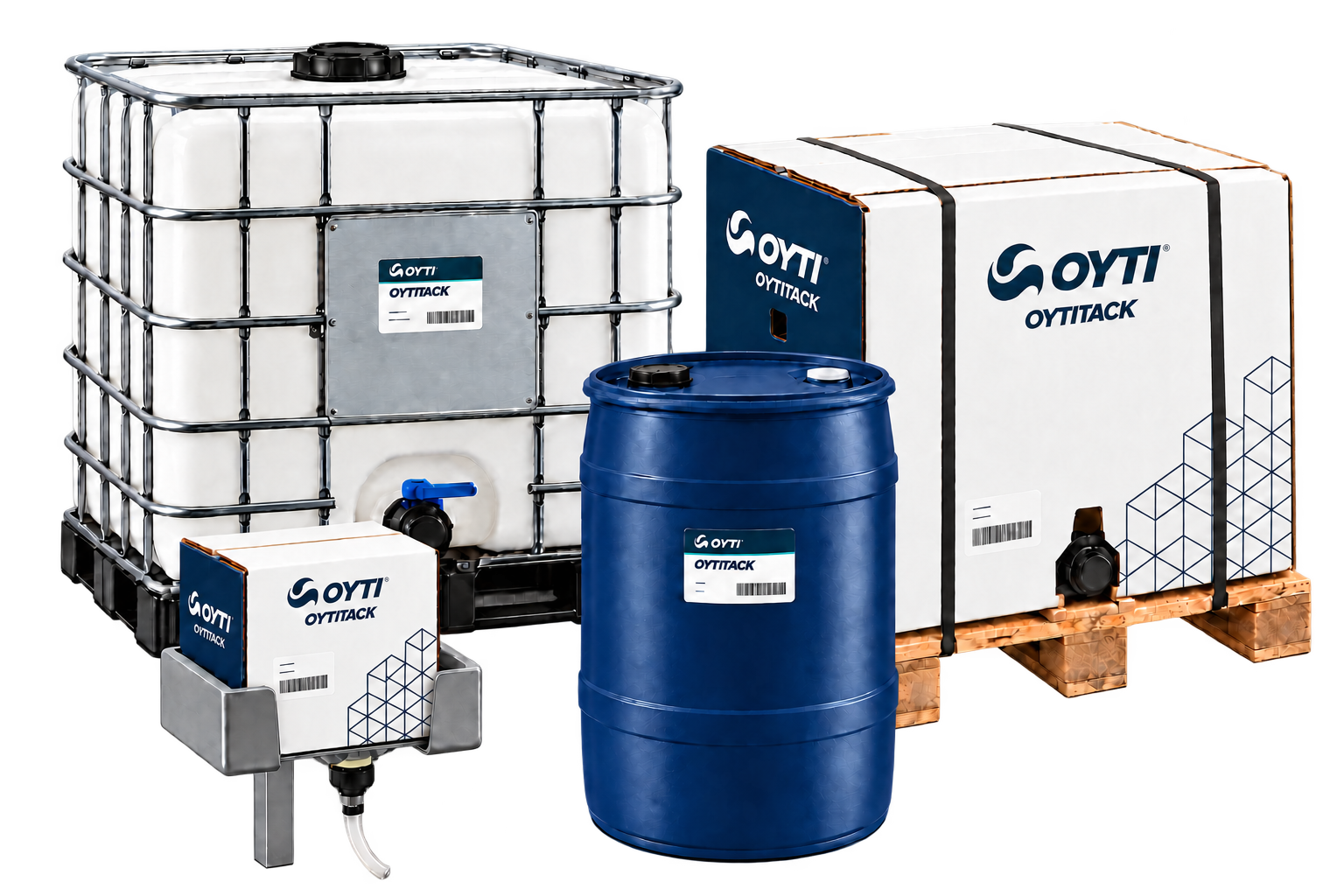
The wider OYTITACK range includes one- and two-component systems. The application setup depends on the selected grade.
Bring representative samples and the real component shape. Select the information you can share to prepare a focused conversation with our application team.